Keep your RV water clean and safe! Learn the easy steps to sanitize your fresh water tank effectively.
Clean water is essential for a comfortable RV trip. Whether you're cooking, washing dishes, or filling a drinking glass, your RV fresh water tank needs regular attention. Over time, stored water can develop unpleasant odors, and moisture inside the plumbing can create conditions for microbial growth.
Knowing how to sanitize a fresh water RV tank helps keep your water system clean and ready for your next trip.The process involves draining old water, preparing an approved sanitizing solution, circulating it through the plumbing, and flushing everything thoroughly.
This guide explains how to sanitize your RV water tank safely, what supplies you'll need, and how to keep your water system in good condition.
Your RV drinking water tank stores the water used by faucets, sinks, and sometimes showers. Even when the tank looks clean from the outside, stagnant water and residue can collect inside the system.
Regular RV fresh water tank maintenance helps reduce unwanted odors and keeps the plumbing ready for use. This becomes particularly important when your RV has been in storage for an extended period or its tank has been filled with water from an unreliable source.
Watch for these common warning signs:
These signs may indicate that RV water tank disinfection or further inspection is necessary. If contamination is suspected, avoid drinking the water until the problem has been properly addressed.
Before starting, gather the supplies recommended for your RV model. Proper preparation makes the process easier and reduces the chance of damaging components.
If your manufacturer permits bleach, confirm its required strength and dilution. Never combine bleach with vinegar, ammonia, or any other cleaning chemicals.
Sanitizing an RV fresh water tank is manageable when you follow the correct sequence. However, different manufacturers use different plumbing systems, water heaters, and treatment procedures.
Before starting RV water system sanitization, make sure to review the instructions in your RV owner’s manual.
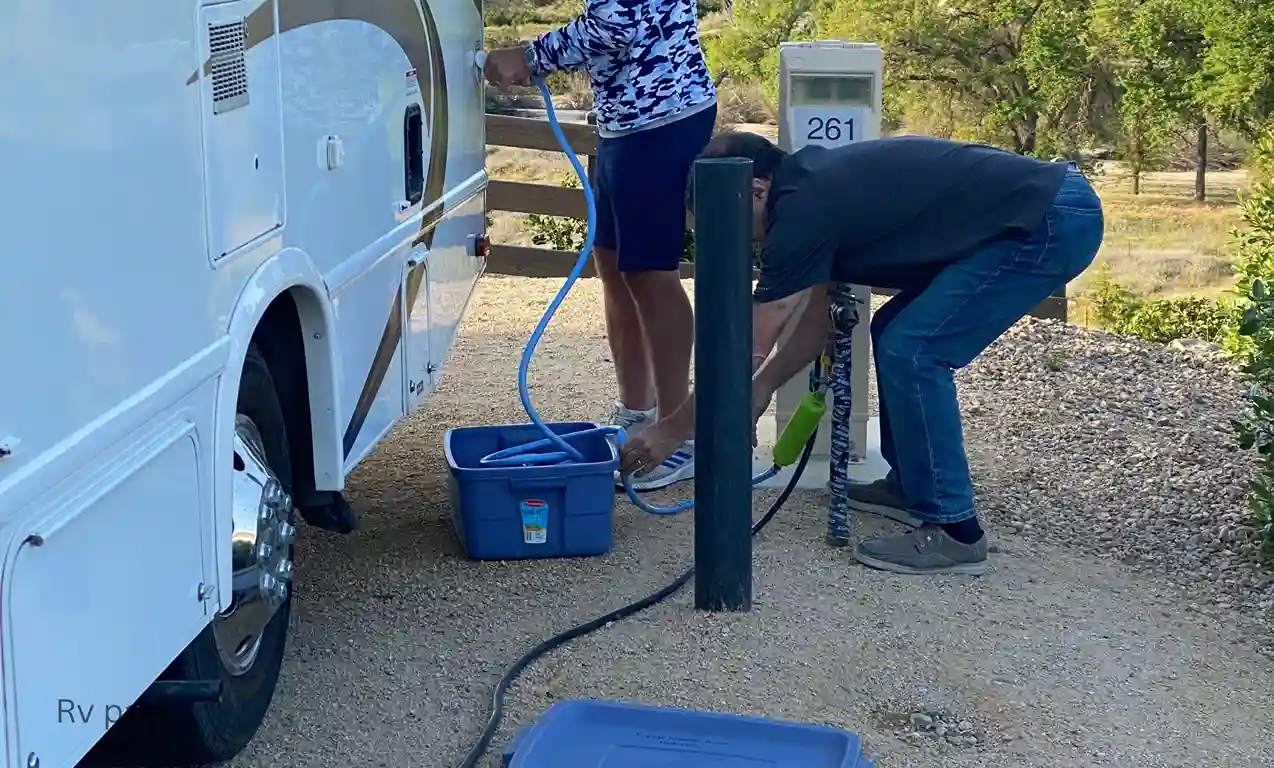
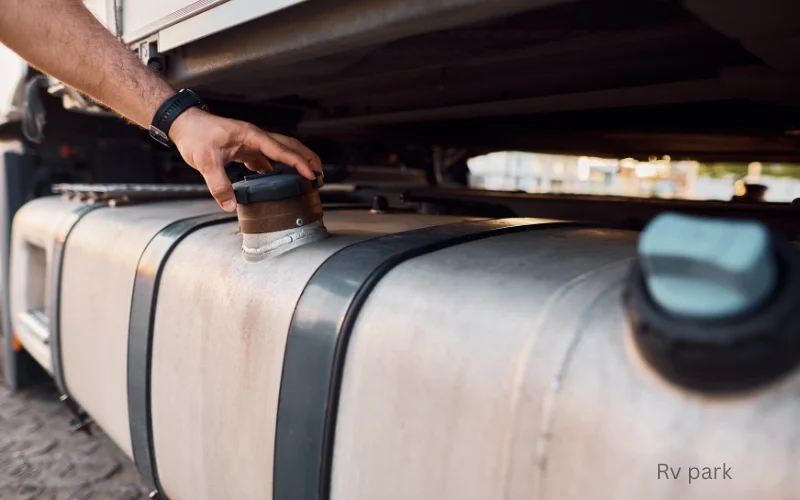
Turn off the water pump and disconnect the external water supply. Locate the tank’s drain valve, open it, and let the old water flow out completely. If your RV has low-point drains, follow the owner’s manual to empty the remaining water from the plumbing.
Check your RV manufacturer’s recommended cleaning method. Some manufacturers recommend mixing 1/4 cup of plain, unscented 5% household bleach with one gallon of water for every 15 gallons of tank capacity. Always verify the correct dilution for your RV and never mix bleach with other cleaning chemicals.
Pour the diluted solution into the designated fresh water fill inlet, following your RV’s instructions. Fill the tank with clean, potable water while monitoring the water level. Some RVs use a valve-controlled filling system, so check your manual before starting.
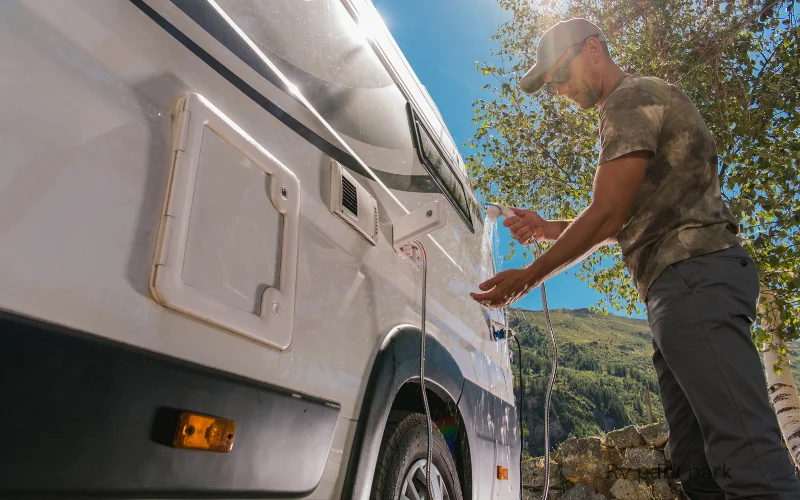
Turn on the water pump and open each faucet until the sanitizing solution reaches the water lines, following the manufacturer’s procedure. Close the faucets afterward. Confirm whether the water filters should be removed and if the water heater needs to be bypassed.
Allow the sanitizing solution to remain in the system for the contact time recommended by your RV manufacturer. Some procedures require several hours. Avoid increasing the bleach concentration or shortening the recommended treatment time.
Drain the sanitizing solution into an appropriate disposal area. Fill the tank again with fresh, clean water, then rinse the faucets and water lines as directed in your RV owner’s manual. Continue flushing until the system is ready for safe drinking water use.
Good RV fresh water tank care goes beyond regular sanitization. A few simple maintenance habits can help prevent unpleasant odors, reduce contamination risks, and keep your water system in good condition.
Always use a drinking-water-safe hose when filling your RV potable water tank. Keep both ends clean, store the hose properly, and never use it for sewer-related tasks.
Water left unused in an RV tank can develop unpleasant odors, especially during hot weather. Follow your manufacturer's draining and storage instructions to support RV water tank bacteria prevention.
Check hoses, valves, and plumbing connections for leaks or damage. Replace water filters as recommended and inspect the filling equipment. For proper RV water tank odor removal, first determine whether the unpleasant smell is coming from the tank, plumbing lines, or water heater before selecting a suitable cleaning method.
Small mistakes can affect the results of RV water system sanitizing or damage sensitive components.
Following the proper process is more useful than repeatedly adding cleaning chemicals.
RV water tank cleaning frequency varies depending on how regularly you travel, the length of time your RV remains unused, and the manufacturer's guidelines. Routine sanitization helps keep the water system clean while minimizing the chances of unpleasant smells.
You should consider sanitizing the tank before using a new RV, after extended storage, or whenever water contamination is suspected. Many RV owners also include this task in their seasonal maintenance routine.
There's no fixed cleaning schedule for every RV. Follow your manufacturer's guidelines and keep track of previous sanitization dates to maintain your fresh water system properly.
For long-term RV stays, keeping your water system clean is essential. Always use a drinking-water-safe hose when connecting to campground water and follow your RV manufacturer’s instructions for water pressure and plumbing maintenance.
Even with full hookups, your fresh water tank still needs regular care. Travelers searching for RV sites in Midland, TX can explore Midland East RV Park, which offers full-hookup sites for short- and long-term stays.
Access to water and sewer connections makes everyday RV living more convenient, but regular tank sanitization and internal plumbing maintenance remain important.
The correct amount depends on tank capacity, bleach concentration, and your RV manufacturer's instructions. Some manufacturers specify 1/4 cup of 5% unscented household bleach per 15 gallons of tank capacity, diluted before adding. This ratio should not replace your model-specific instructions.
Turn off the water pump and disconnect the water supply. Locate the fresh water tank drain valve, open it, and allow the water to empty into an appropriate location. Some RVs also require opening low-point drains. Close the valves after draining.
Use a clean potable-water hose and locate the designated fresh water fill connection. Depending on your trailer, you may need to select a tank-filling valve position. Fill slowly, monitor the water level, and follow the owner's manual to prevent overfilling.
Bleach can affect certain water-heater components if used incorrectly or at unsuitable concentrations. Some RV manufacturers require bypassing the heater during sanitization, while others specify a different procedure. Check both the RV and water-heater manuals before introducing any sanitizing solution.
If bacterial growth is suspected, stop using the affected water for drinking and follow the water-heater manufacturer's cleaning and sanitizing instructions. The correct procedure depends on the heater type. Persistent odors, unusual water quality, or recurring contamination may require professional inspection.
Park on suitable ground, turn off the water pump, and locate the tank's drain outlet. Open the valve and allow the water to drain. Follow manufacturer instructions for low-point drains if needed, and dispose of the water appropriately. Close all valves before refilling.
Learning how to sanitize an RV fresh water tank is an important part of responsible RV ownership. Draining old water, using the correct sanitizing solution, allowing proper contact time, and flushing the plumbing can help maintain a cleaner water system.
Regular inspections and careful RV water system maintenance also make it easier to identify problems before your next trip.
Planning an RV stay in Midland, Texas? Explore Midland East RV Park or contact the team to learn about full-hookup RV sites and available accommodations.
$499 MOVE-IN SPECIAL!
Get your first 2 months for just $499/month.
New reservations only. Offer ends December 31, 2026.